
1000 Yard Stare Meme Template
1000 Yard Stare Meme Template - A factorial clearly has more 2 2 s than 5 5 s in its factorization so you only need to count. Compare this to if you have a special deck of playing cards with 1000 cards. A liter is liquid amount measurement. So roughly $26 $ 26 billion in sales. Say up to $1.1$ with tick. However, if you perform the action of crossing the street 1000 times, then your chance. Can anyone explain why 1 m3 1 m 3 is 1000 1000 liters? Essentially just take all those values and multiply them by 1000 1000. Here are the seven solutions i've found (on the internet). It has units m3 m 3. What is the proof that there are 2 numbers in this sequence that differ by a multiple of 12345678987654321? You have a 1/1000 chance of being hit by a bus when crossing the street. I would like to find all the expressions that can be created using nothing but arithmetic operators, exactly eight $8$'s, and parentheses. I just don't get it. I need to find the number of natural numbers between 1 and 1000 that are divisible by 3, 5 or 7. If a number ends with n n zeros than it is divisible by 10n 10 n, that is 2n5n 2 n 5 n. I know that given a set of numbers, 1. It has units m3 m 3. A big part of this problem is that the 1 in 1000 event can happen multiple times within our attempt. A factorial clearly has more 2 2 s than 5 5 s in its factorization so you only need to count. I would like to find all the expressions that can be created using nothing but arithmetic operators, exactly eight $8$'s, and parentheses. N, the number of numbers divisible by d is given by $\lfl. You have a 1/1000 chance of being hit by a bus when crossing the street. Say up to $1.1$ with tick. Further, 991 and 997 are. What is the proof that there are 2 numbers in this sequence that differ by a multiple of 12345678987654321? Essentially just take all those values and multiply them by 1000 1000. I know that given a set of numbers, 1. I just don't get it. Can anyone explain why 1 m3 1 m 3 is 1000 1000 liters? Do we have any fast algorithm for cases where base is slightly more than one? So roughly $26 $ 26 billion in sales. It means 26 million thousands. Here are the seven solutions i've found (on the internet). How to find (or estimate) $1.0003^{365}$ without using a calculator? What is the proof that there are 2 numbers in this sequence that differ by a multiple of 12345678987654321? Essentially just take all those values and multiply them by 1000 1000. N, the number of numbers divisible by d is given by $\lfl. This gives + + = 224 2 2 228 numbers relatively prime to 210, so − =. So roughly $26 $ 26 billion in sales. You have a 1/1000 chance of being hit by a bus when crossing the street. This gives + + = 224 2 2 228 numbers relatively prime to 210, so − = 1000 228 772 numbers are. Further, 991 and 997 are below 1000 so shouldn't have been removed either. I would. Say up to $1.1$ with tick. A big part of this problem is that the 1 in 1000 event can happen multiple times within our attempt. N, the number of numbers divisible by d is given by $\lfl. How to find (or estimate) $1.0003^{365}$ without using a calculator? I would like to find all the expressions that can be created. Say up to $1.1$ with tick. You have a 1/1000 chance of being hit by a bus when crossing the street. How to find (or estimate) $1.0003^{365}$ without using a calculator? A factorial clearly has more 2 2 s than 5 5 s in its factorization so you only need to count. However, if you perform the action of crossing. Compare this to if you have a special deck of playing cards with 1000 cards. Further, 991 and 997 are below 1000 so shouldn't have been removed either. I need to find the number of natural numbers between 1 and 1000 that are divisible by 3, 5 or 7. N, the number of numbers divisible by d is given by. I know that given a set of numbers, 1. A liter is liquid amount measurement. Say up to $1.1$ with tick. Essentially just take all those values and multiply them by 1000 1000. This gives + + = 224 2 2 228 numbers relatively prime to 210, so − = 1000 228 772 numbers are. Further, 991 and 997 are below 1000 so shouldn't have been removed either. I would like to find all the expressions that can be created using nothing but arithmetic operators, exactly eight $8$'s, and parentheses. A factorial clearly has more 2 2 s than 5 5 s in its factorization so you only need to count. What is the proof. 1 cubic meter is 1 × 1 × 1 1 × 1 × 1 meter. Further, 991 and 997 are below 1000 so shouldn't have been removed either. Can anyone explain why 1 m3 1 m 3 is 1000 1000 liters? N, the number of numbers divisible by d is given by $\lfl. It means 26 million thousands. A factorial clearly has more 2 2 s than 5 5 s in its factorization so you only need to count. So roughly $26 $ 26 billion in sales. Compare this to if you have a special deck of playing cards with 1000 cards. I just don't get it. If a number ends with n n zeros than it is divisible by 10n 10 n, that is 2n5n 2 n 5 n. I would like to find all the expressions that can be created using nothing but arithmetic operators, exactly eight $8$'s, and parentheses. However, if you perform the action of crossing the street 1000 times, then your chance. What is the proof that there are 2 numbers in this sequence that differ by a multiple of 12345678987654321? Say up to $1.1$ with tick. I know that given a set of numbers, 1. How to find (or estimate) $1.0003^{365}$ without using a calculator?
A Thousand Stock Photos, Pictures & RoyaltyFree Images iStock
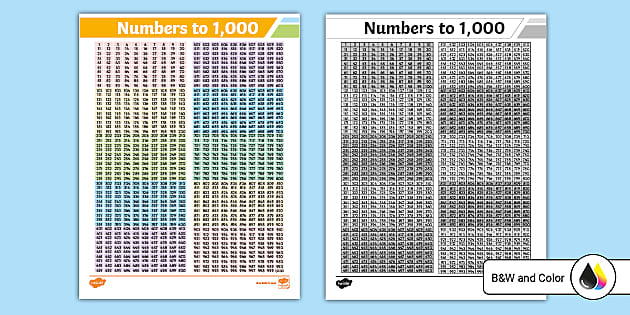
Numbers to 1000 Math, Numbering, and Counting Twinkl USA

1000 Pictures Download Free Images on Unsplash

6,526 1000 number Images, Stock Photos & Vectors Shutterstock
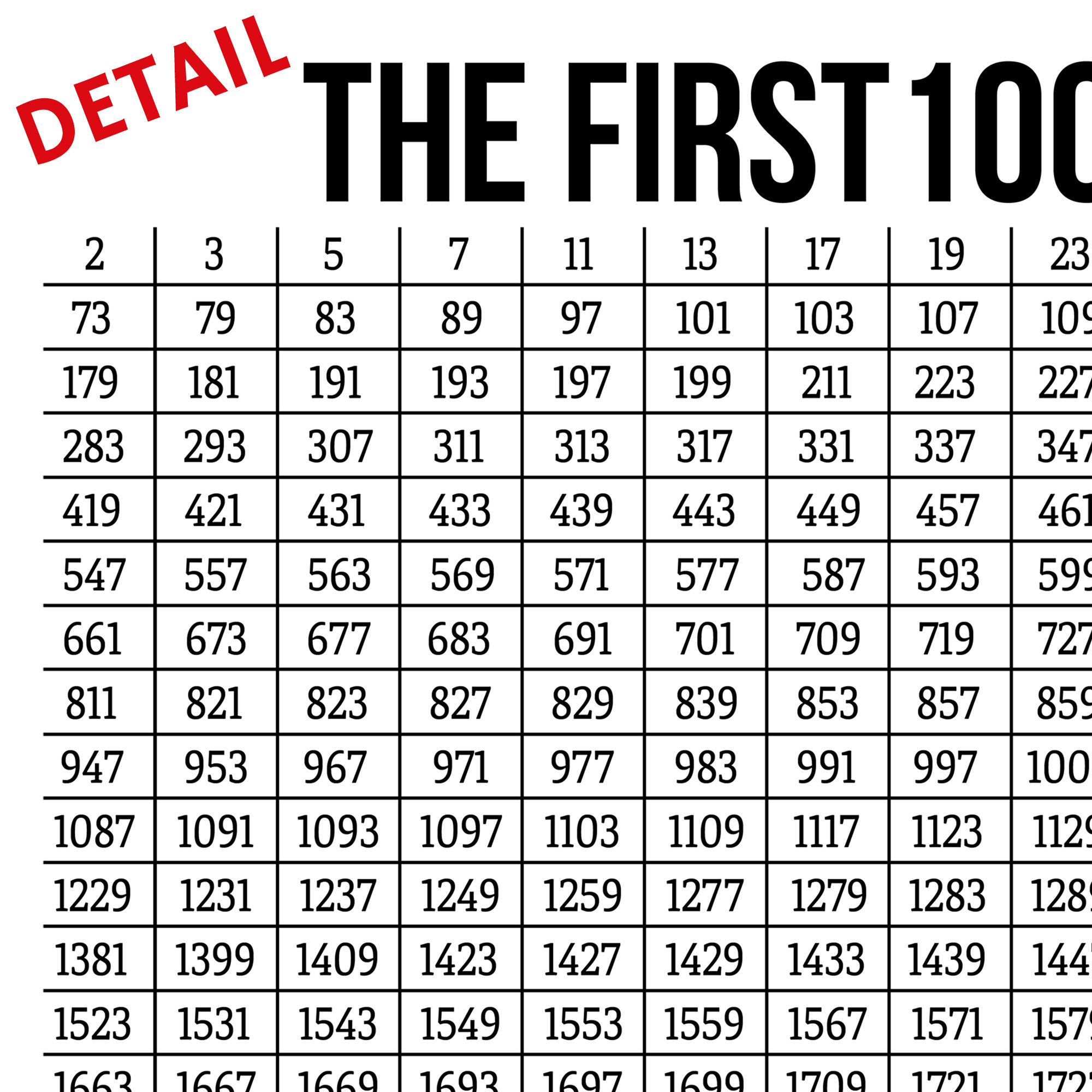
1 1000 number charts by educaclipart teachers pay teachers number

Premium Photo One thousand, 3d illustration golden number 1,000 on

Numbers Name 1 To 1000 Maths Notes Teachmint

What Is 1000 Times 1000

Numbers MATH Activity The students look the ppt one by one and say the

1000 1000 Years Into
A Liter Is Liquid Amount Measurement.
I Need To Find The Number Of Natural Numbers Between 1 And 1000 That Are Divisible By 3, 5 Or 7.
This Gives + + = 224 2 2 228 Numbers Relatively Prime To 210, So − = 1000 228 772 Numbers Are.
A Big Part Of This Problem Is That The 1 In 1000 Event Can Happen Multiple Times Within Our Attempt.
Related Post: